Tag: accessible home design

  • Future-Proof Your Home: Remodeling Ideas for Comfort and Accessibility 

    Future-Proof Your Home: Remodeling Ideas for Comfort and Accessibility 

    As more homeowners focus on living in place, they are requesting remodeling projects that prioritize safety, accessibility, and future-proofing. These changes not only make homes more functional, but also enhance comfort and longevity for older adults who would prefer to age in their current homes. From universal design to innovative technologies, here are the top trends for remodeling homes with aging in mind:

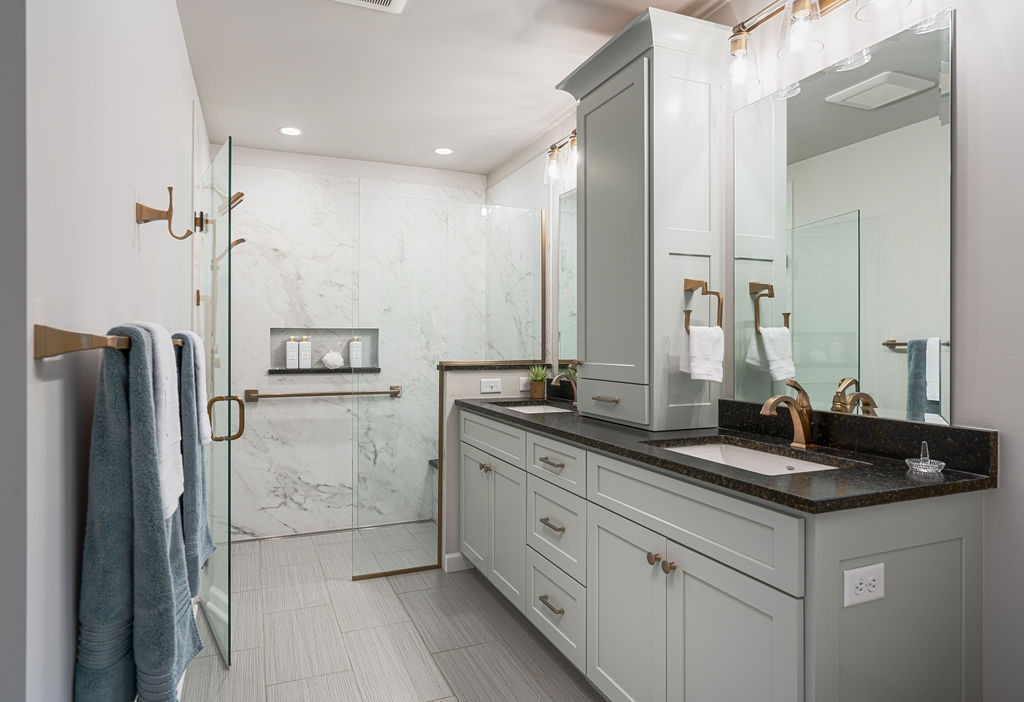
    1. Universal Design for Accessibility is fundamental to creating spaces that are usable for everyone, regardless of age or ability. Bathroom remodels are crucial for living in place, incorporating features like zero-entry showers, grab bars, and adjustable-height vanities to improve safety. These modifications can seamlessly blend with the overall aesthetic of a bathroom, maintaining both functionality and style. Laura Watson, Development Manager, ASID, UDCP, at The Cleary Company, emphasizes that “accessible design isn’t just about making homes safe—it’s about creating an environment that evolves with the homeowner’s needs.”

      Beyond the bathroom, open-concept living is another major trend, enabling greater mobility by reducing physical barriers like narrow hallways and thresholds. This approach supports homeowners who might use mobility aids such as walkers or wheelchairs. Learn more about Universal Design on our blog!

    2. Technology Enhancements. The integration of smart home technology is revolutionizing aging-in-place design. Homeowners are increasingly adopting features like voice-activated lighting, automated climate control, and fall-detection systems, which provide added security and convenience. These technologies help create a home that is not only easier to manage, but also safer for older adults who wish to maintain their independence.

      Smart kitchens are becoming more common, with innovations such as touchless faucets, remotely controlled ovens, and motion-sensor lighting. These upgrades help simplify daily tasks and enhance the usability of the space as mobility and dexterity change over time. 

    3. Kitchen Adaptations. Remodeling for accessibility is a key focus for aging in place. Updates like varying countertop heights allow for both seated and standing use, while drawer-style dishwashers and pull-out shelving provide easy access to storage and appliances. These design elements ensure that the kitchen remains a functional and central part of the home, no matter the homeowner’s age or mobility.

      Incorporating smart appliances, such as refrigerators that alert you when you’re low on groceries or ovens that can be controlled via smartphone, adds an extra layer of convenience. These features are ideal for those who want to age in place while embracing modern technology. 

    4. Multi-Generational Living. projects increasingly focus on creating flexible spaces for multi-generational households. Homeowners are transforming basements or spare rooms into separate living areas, complete with bathrooms and small kitchenettes. These spaces provide privacy for aging relatives or long-term guests while keeping everyone under the same roof. 

    5. Sustainable Design Choices are also becoming a growing priority in remodeling. Many homeowners are choosing eco-friendly materials like bamboo flooring and recycled countertops, along with energy-efficient appliances. These materials not only reduce the environmental impact but also contribute to long-term savings in utility costs. Energy-efficient windows, water-saving fixtures, and solar panels are additional sustainable choices that are becoming more popular in aging-in-place remodels. These updates align with both financial and environmental goals, helping homeowners create spaces that are cost-effective and eco-conscious over time. 

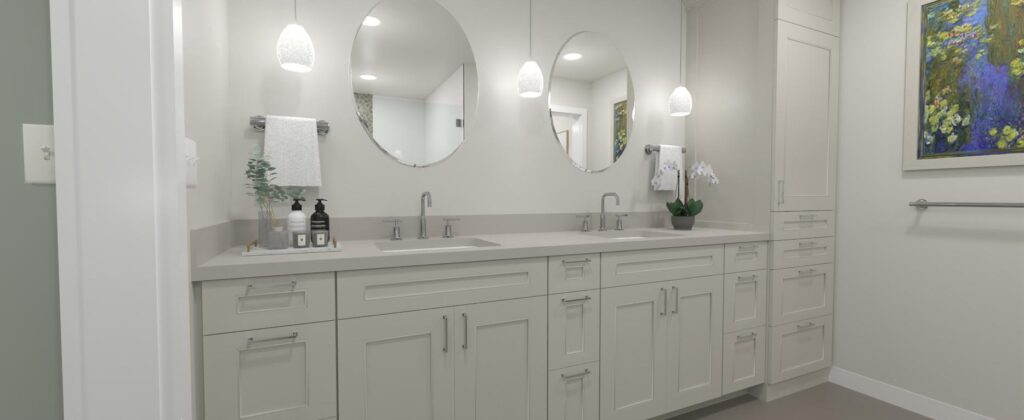
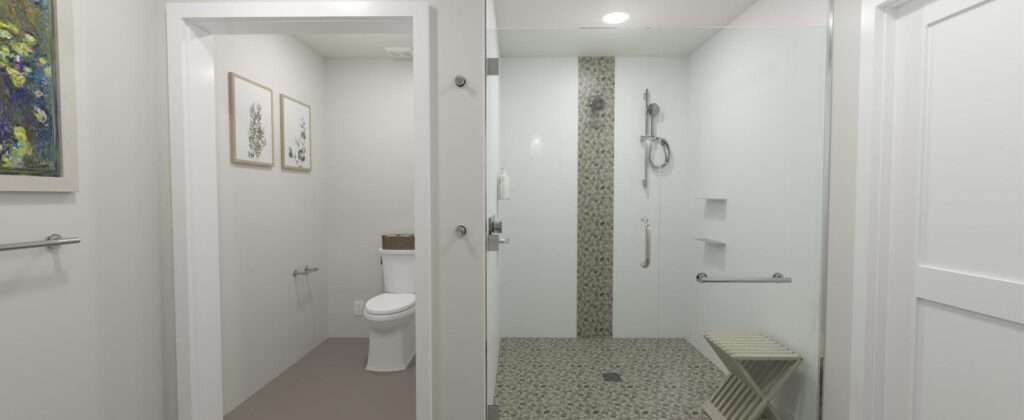
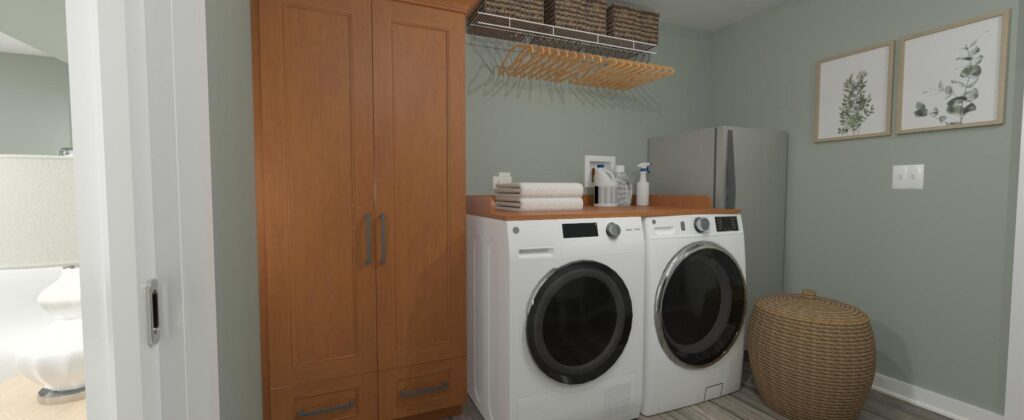
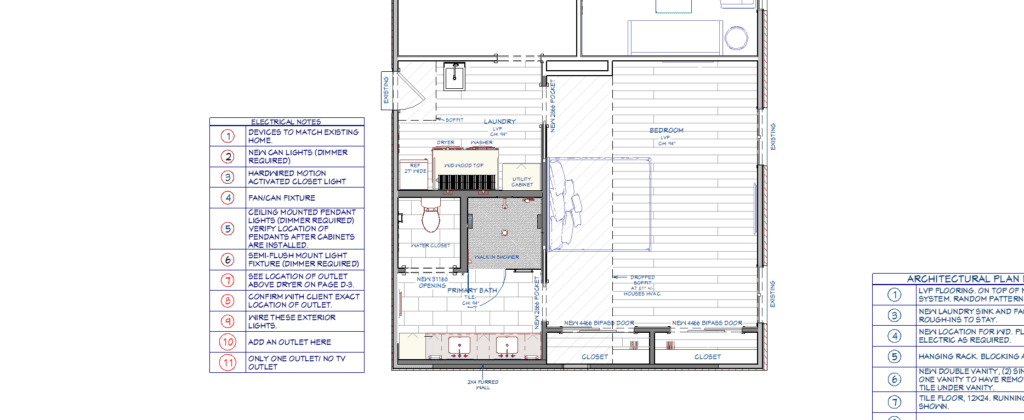
    Proposed Design Concept | Primary Suite Addition
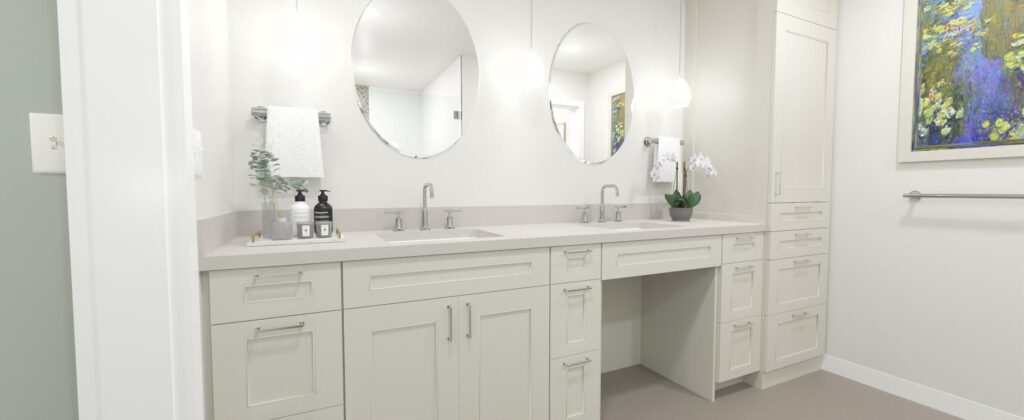
    For the primary bathroom above, Designer Katie Florjancic, UDCP, planned for a removeable cabinet in the vanity designed for future wheelchair sink access, giving the clients flexibility in the space as they age and needs change. The space is designed for a wheelchair to have access to the sink. Other Universal design features include:

    • Zero Entry Shower with a bench, handrails and multifunction shower heads, including a handheld spray on a rail for different height positions.
    • Solid surface flooring with no or low profile transitions between tile and LVP.
    • Hardwired motion activated closet lights.

    Beyond Accessibility 

    Remodeling for living in place goes beyond accessibility—it’s about creating a home that is both functional and future-proof. Incorporating universal design principles, integrating smart technology, and using sustainable materials ensures that homes remain comfortable and safe as their owners’ needs evolve. As Laura Watson aptly puts it, “The best design looks ahead, anticipating tomorrow’s needs while maintaining today’s comfort.” 

    These trends highlight the growing importance of thoughtful, adaptable design in remodeling projects, ensuring that homes can support their owners throughout all stages of life. Learn more about Accessibility and Universal Design at the Universal Design Living Laboratory, a home located in Columbus, Ohio!

    Planning to remodel your home? Why not future-proof it while you’re at it? Schedule a call with our Client Relations Coordinator to get started.
  • Designing for Accessibility in Your Home Remodel

    Designing for Accessibility in Your Home Remodel

    There are many reasons why you may be ready for a remodel. Do your dated rooms feel old and tired? Does your home function for your current lifestyle? Or maybe you’d like to create a more accessible home to accommodate different life stages and abilities.

    Our Design-Build Team at The Cleary Company in Columbus, Ohio takes our remodeling designs seriously and wants to be sure they are accessible for all. We collaborate with our clients to create a design plan that considers these and other accessibility challenges in their home.

    3 Types of Accessibility Issues to Consider:

    • Visual — Use color to highlight or complement what is already visible but also ensure sufficient contrast. Paint door frames and doors a lighter color than the walls.
    • Motor/Mobility — Choose solid surface floors throughout like wood, tile or vinyl and minimize the number of transitions between materials. Eliminate or reduce the use of rugs or carpets. Wider hallways, doorways and traffic flow for accommodating wheelchairs, walkers, etc.
    • Auditory — Creating a more open concept floor plan allows for unobstructed sight lines for easier communication. The arrangement of the room can also make a significant difference for those who use lipreading or sign language. Circular or horseshoe seating layouts work best.

    Design Features to Consider:

    • Single story living
    • Limited steps inside and outside
    • Wider hallways and entryways
    • Open floor plans
    • Low maintenance exterior and landscape
    • Varying height countertops
    • Easy-to-reach work and storage areas in the kitchen and bathrooms
    • Walk-in or zero-entry showers

    Terminology used for Accessibility in Home Design

    Living in Place or Aging in Place — Both used interchangeably have become more popular as people want to stay in their homes longer. This means the home needs to be safe, healthy, and comfortable for everyone in the household, no matter their age or accessibility. Are there hazards, barriers, or floor plan issues that need to be rectified to create a design that all people can use, especially those with memory, cognitive or physical challenges?

    Universal Design — Sometimes used interchangeably with the previous two terms. This approach to home design is to meet the needs of everyone. Regardless of age, size, ability or accessibility, a design is created, understood, and used by everyone, as much as possible. Read more about Universal Design on our blog.

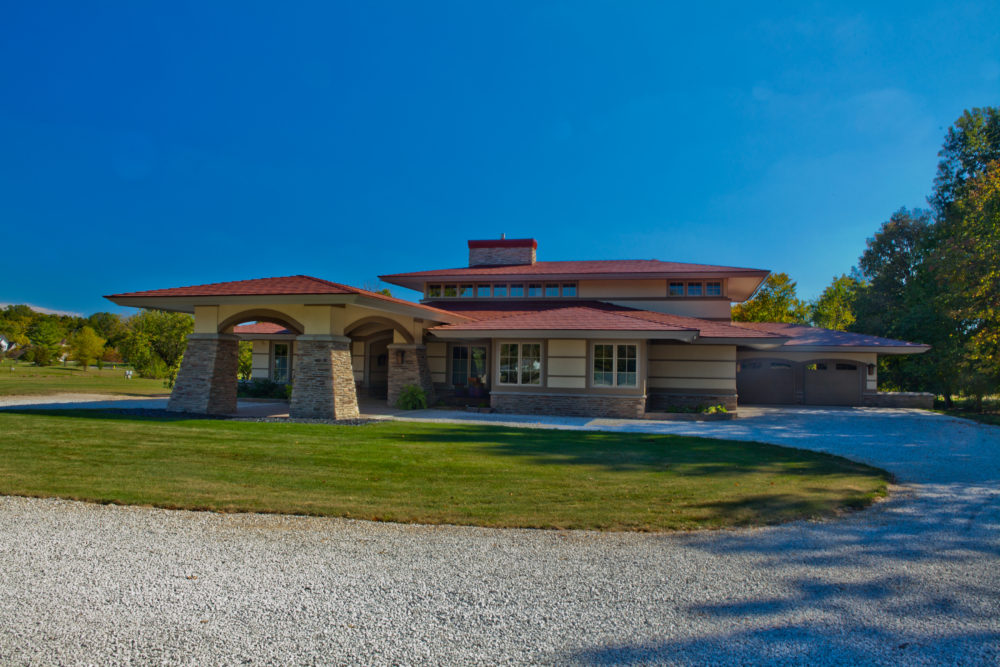
    An excellent example of such design exists right here in Columbus! This 3,500sf ranch home was built in 2009. It is not only the private residence of Rosemarie Rossetti, Ph.D and her husband, Mark Leder but also a one-of-a-kind national demonstration home called the Universal Design Living Laboratory. Our Team had the privilege of touring this amazing home in 2015. We appreciate our conversations with Rosemarie, whose personal work in Universal Design has been instrumental in educating home industry professionals.

    Universal Design Living Laboratory – 6141 Clark State Road, Columbus, Ohio 43230

    ADA Compliant — This term refers to actual code compliance rules included in the American Disabilities Act Standards for Accessible Design. An ADA-compliant home follows these codes entirely.

    Visit-ability — This one is interesting because it isn’t so much about who lives in the home, but who is visiting. How will they navigate throughout your home if they are wheelchair-bound or have other mobility issues?

    Areas to consider:

    • Entrances and exits of the home
    • Bathroom accessibility
    • Bedroom access for those who can’t use stairs
    • Hallways should be wide enough to accommodate wheelchairs or motorized scooters

    Adaptable Design — This realizes an important middle-ground area in the designing of homes, putting it somewhere between full accessibility and a home filled with accessibility challenges. Creating a remodeled home that can easily be adapted to accommodate changing needs can save money over time if it is thought of now.

    Are there products or design elements that can be put in place now, that can be used later? You may not want a walk-in shower now, but will it be needed down the road? Does the structure behind the walls need to allow for grab bars to be added beside a toilet or in a shower? Does the island have an area that is lower, allowing a wheelchair to be rolled up to it?

    NARI UDCP – Universal Design Certified Professional

    The Cleary Company Remodel-Design-Build in Columbus, Ohio is proud to have several Team members who’ve earned accreditation in Universal Design from the National Association of the Remodeling Industry!

    The UDCP program addresses the key concepts of Universal Design as applied to residential remodeling:

    • Conducting client needs assessments
    • Universal design applications used in residential remodeling
    • Construction techniques used to implement universal design to a remodeling project
    • Plumbing and electrical systems unique to universal design
    • Differences between model building codes and ones described in the Americans with Disabilities Act (ADA)

    No matter what accessibility, aging challenges or planning for the future you might be doing now — our Design Team is here to collaborate with you to create the vision you need for your home.

    Ready for a Home Remodel?

    Get started today by calling our Client Relations Coordinator @ 614-459-4000 or by visiting our website.